clearout
  • Products
    • Email Verifier Verify emails addresses individually, in bulk or through API, with 99% accuracy
    • Email Finder Find individual or bulk emails by entering the person & company name or domain
    • Form Guard IconForm Guard Protect your forms from spam, bots, and invalid submissions with real-time email, phone, and name verification.
    • Prospect SQL/MQL list building with high levels of personalization, real-time data enrichment and prospect search
    • Clearout For SheetsVerify email addresses directly on Google Sheets with Clearout for sheets add-on
    • Prospect – LinkedIn Chrome ExtensionBuild verified, targeted prospect lists directly from LinkedIn profiles
    • ClearoutPhoneValidate phone numbers across 240+ countries in bulk, quick or real time validation
    • Free Tools
    • Disposable Email Checker
    • Reverse LinkedIn Profile Lookup Tool
    • Reverse Email Lookup Tool
    • Email List Cleaner
  • Resources
      DEVELOPERAPI iconAPI
      Clearout APIs are structured around REST and JSON
      Webhooks iconWebhooks
      Capture real-time events in your application workflow
      Form Guard iconForm Guard
      Real-time form validation to keep bad contacts out of your CRM
      KNOWLEDGE BASEGetting started iconGetting started
      Sending campaigns without bounces is made simple
      FAQ iconFAQ
      Easily find answers to services, security and common questions
      USE CASESLead Generation iconLead Generation
      Learn how professionals generate quality leads
      GUIDESPricing arrow iconTransparent & flexible pricing to support pay-per-use or recurringCompare Email Verification Tools arrow iconAI-powered email verification with 99%+ accuracy, real-time validation, and transparent risk scoringCompare Email Finder Tools arrow iconPre-verified B2B email addresses with confidence scoring, find real person email, not role-based addressBLOGSEmail Verification ToolsFind Anyone’s Email Address
      Most Accurate, Fast & Free Ways
      Form Validation
      Importance, Ways & Best Practices
      View All Blogs
  • Pricing
  • Integrations
  • Enterprise
  • Login
Try it free Book a 1-to-1 demo
Priyanshi Sharma / December 26, 2025 December 26, 2025

11 Reasons Why Email Verification is Crucial in Healthcare


11 Reasons Why Email Verification is Crucial in Healthcare

Some healthcare organizations lost $9.8 million per incident in 2024 as their patient data got breached. Yes, it's surprising.

One breach can wipe out almost ten million dollars.

Here is the part many healthcare IT leaders do not talk about. A surprising number of these incidents start with something that feels harmless at first. An invalid or unmonitored email address is sitting inside a patient database. It appears to be a minor thing, but it points to larger issues.

This guide will walk you through the 11 reasons why healthcare email verification matters so much today. It will show you what is at risk, where the vulnerabilities hide, and how you can protect your systems before a small issue turns into a crisis.

Table Of Content


‣ What Is Real-time Email Verification in Healthcare?
‣ 11 Reasons Why Patient Email Verification is Important
‣ How To Do Patient Email Validation/Verification?
‣ How to Implement Email Verification With Clearout in the Healthcare System?
‣ The Healthcare Email Verification Comparison Matrix
‣ The Bottom Line: Email Verification Is Healthcare Risk Management
‣ FAQs
What Is Real-time Email Verification in Healthcare?


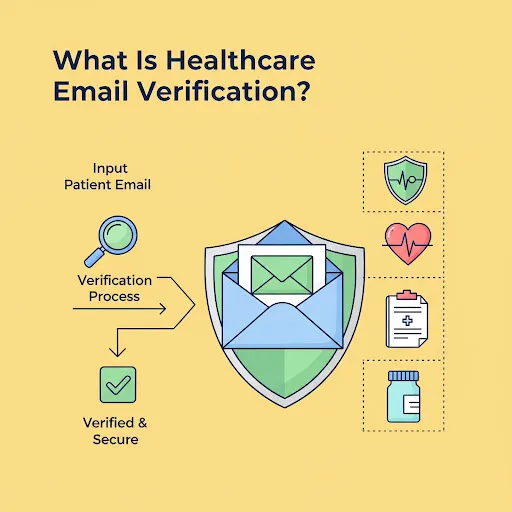
What Is Healthcare Email Verification?

Before we delve into why email verification is so crucial in healthcare, it's essential to clarify what “accurate email data” means in a medical context.

If the address looks correct, the system accepts it. But healthcare cannot rely on that. You deal with PHI, strict regulations, and high-stakes communication. So your email accuracy needs to be much stronger.

Here is what a healthcare-ready real-time email verification process looks like, and what tools like Clearout bring to the table:

  • Real-Time Email Format & Syntax Validation

  • This checks formatting, syntax, and structure so that bad data never enters your CRM in the first place.


  • Domain & MX Record Validation

  • Next, the system confirms that the domain actually exists, has valid MX records, and can receive messages. This protects you from invalid patient data that would disrupt patient communications later.


  • Catch-all Domain Detection

  • Some domains accept every email, even if the mailbox does not exist. This creates a false sense of accuracy. Clearout email verification tools use an advanced catchall resolver algorithm to identify and further resolve the catch-all domains status.


  • Disposable Email Flagging

  • Patients sometimes enter temporary email addresses, especially when they want quick access to a portal or form. These addresses work for a moment, then disappear. Clearout can flag this so you can prevent breakdowns in long-term communication.


  • Role-based Email Identification

  • Emails like [email protected] or [email protected] do not belong to actual patients or doctors. They often lead to misrouted communication and failed automated workflows.


  • HIPAA-aligned Processing

  • This is where healthcare is different from every other industry. Verification needs to happen in a way that keeps patient data private.


When you compare basic validation with healthcare-grade verification, the gap is huge. Basic checks only confirm that a door exists. Healthcare verification confirms that it is the right door, it opens, and it leads somewhere safe for both you and your patients, also removing the manual errors at the entry desks

11 Reasons Why Patient Email Verification is Important


Here are the reasons why you should do patient email verification:

1. HIPAA Compliance Is the Law


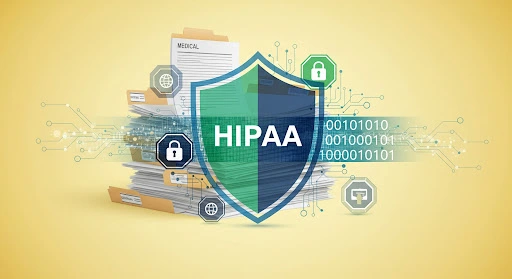
 HIPAA Compliance

Let’s start with the biggest reason of all. HIPAA is not optional. If you work in healthcare, you already know that accurate patient contact information is not just a “nice-to-have.” It is a legal requirement. And that includes email accuracy.

How Email Verification Fits Into HIPAA?


If your email hit the wrong mailbox, even for a moment, patient information was exposed without authorization. That is exactly what HIPAA is designed to prevent.
And the consequences are real.

How Email Verification Helps You Stay Compliant?


This is where proper email verification becomes a safeguard rather than a simple technical step.

  • Point-of-entry validation
  • When someone enters their email during registration or intake, real-time verification helps you catch typos and errors immediately. You are not only improving accuracy. You are creating evidence that your team took reasonable steps to ensure the address was correct.


  • Ongoing list hygiene
  • The AI engine of Salesforce helps your team determine where to target. It ranks deals, flags potentially risky deals, and extrapolates information on historical data. Einstein can also estimate the probability of making a deal very well in 2026 and this will assist sales leaders to better plan.


  • BAA protection
  • A legitimate healthcare-ready tool provides a Business Associate Agreement. This means the verification process itself respects HIPAA rules and protects patient information while you check their contact data.


  • Audit-ready documentation
  • If the Office for Civil Rights ever investigates, you can show verification logs and timestamps. This demonstrates that your organization implemented technical safeguards and took compliance seriously.


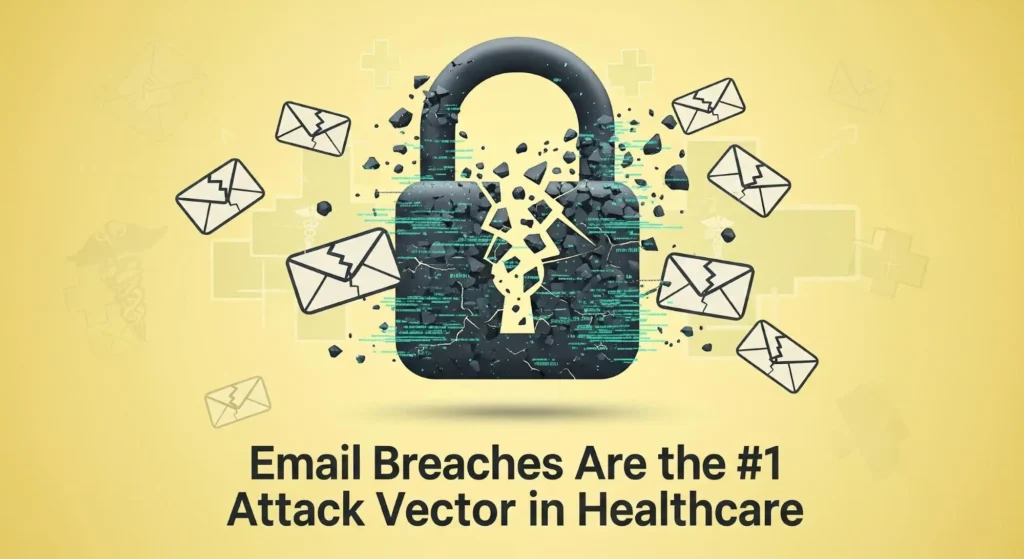
2. Email Breaches Are the #1 Attack Vector in Healthcare


Email breaches are an attack vector in healthcare.

If you think ransomware or highly advanced attacks are your biggest email risks, the data may surprise you. The real danger often shows up in places that feel much simpler.

How Attackers Exploit Invalid or Unverified Emails


  • Abandoned account reuse
  • There are email addresses that are initially legitimate, but they later become inactive. Sensitive information can be sent by the providers to a recycled or reallocated address. This leads to an unintentional leakage, and the sender of a message is often unaware of the leakage.


  • Social engineering signals
  • Attackers use assumptions about your security posture when they detect invalid email in your database. Their email hygiene discrepancies inform them of the possibility of other areas of weakness.


  • Credential stuffing risks
  • If your system contains email addresses that do not belong to actual patients, it suggests weak identity verification. Attackers use this information to increase the success rate of credential stuffing attacks.


The Real Cost of Email-Related Breaches


Email breaches involve:

  • notifying every affected patient
  • providing credit monitoring services
  • covering legal costs from class action lawsuits
  • managing reputational damage that pushes patients to competitors
  • implementing corrective action plans that stretch out for years

3. Patient Communication Failures Harm Care Quality


Email verification in healthcare.

Email verification in healthcare plays a real role in patient care. When your emails actually reach the right people, your entire care delivery system becomes stronger.

The Hidden Cost of Missed Communications


If you cannot reach patients reliably, important moments in the care journey start to break down.

  • Appointment reminders never land
  • When reminders do not reach patients, no-shows go up quickly. This creates empty appointment slots, wasted staff time, and delays for other patients who needed that time.


  • Test results go unread
  • Lab reports, imaging results, and diagnostic updates sent to invalid addresses never get seen. This slows treatment decisions and can even create risks when a patient needs urgent follow-up.


  • Medication instructions disappear
  • After a visit, patients rely on email for guidance. In case of addressing errors, they lose the directions, warnings, and care guidelines that can help them stay safe.


  • Follow-up care breaks down
  • Relevant steps towards discharge, recovery guidelines and chronic care instructions must be delivered to the patient. Bouncing emails and sending them to the wrong address creates problems and results in poor outcomes.


  • Preventive care reminders do not reach the patient
  • Screening notices, vaccination messages, check-up notifications, etc. usually land directly in your mail. In case of invalidity of the email address, preventive care falls to zero.


4. Invalid Emails Destroy Your Sender Reputation


Invalid email address.

The reputation of your email sender determines how successful any message of your organization becomes. It has an influence on patient updates, communication with the referring physicians, outreach to insurance partners, and even internal workflows. Once your reputation falls, then it will be difficult to create a brand.

The Sender Reputation Spiral


When healthcare organizations do not verify patient email addresses, a predictable cycle begins.

  • Invalid addresses create bounce rates in the 15 to 20% range.
  • Email providers start seeing your domain as risky.
  • Important patient updates begin going to spam.
  • Patients miss critical messages, so you send more follow-ups.
  • The extra volume, combined with ongoing bounces, makes your reputation drop even faster.
  • After a point, your domain ends up on blocklists by the ISPs.

Fixing sender reputation takes time. It usually requires months of careful list cleaning, reduced sending volume, and controlled warm-up periods.

The Threshold Numbers You Should Know


Different providers have different tolerance levels, and these thresholds matter.

  • Gmail begins limiting delivery when bounce rates reach 5% and considers blocklisting above 8%.
  • Outlook flags senders as problematic when bounce rates rise above 10%.
  • Yahoo pushes senders into spam folders once they cross the 10% mark.
  • Most healthcare databases that do not verify their email lists sit far above these numbers. A range of 15 to 20% bounces means the domain is already in a danger zone.

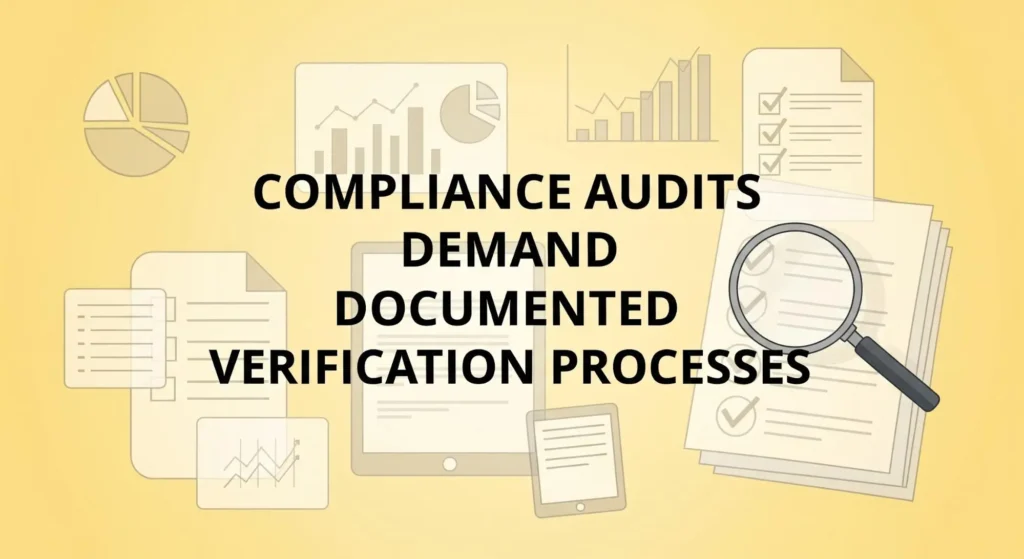
5. Compliance Audits Demand Documented Verification Processes


Compliance audits demand.

When your healthcare organization goes through a compliance audit, the review is never casual. Auditors want to understand every step, and email communication is always part of that conversation.

What Auditors Focus On?


OCR investigators and compliance teams check very specific areas, and email accuracy fits into several of them.

  • Technical safeguards
  • HIPAA expects you to verify that the person receiving PHI is the right person. That includes making sure the email address you use actually belongs to the patient.


  • Risk analysis documentation
  • Auditors want proof that you identified communication risks and put controls in place. Invalid emails are a known risk, so they expect to see how you addressed it.


  • Regular review processes
  • HIPAA’s administrative safeguards require ongoing monitoring of your systems. This includes checking whether patient contact information is still accurate.


The Audit Trail You Need to Have Ready


A strong email accuracy workflow makes audits much easier because you already have the documentation they expect.

  • Verification timestamps
  • These records show when each patient's email was checked and what the results were.


  • Handling of failed verifications
  • Auditors want to see what happens when an address fails. Can you correct it? Flag it? Remove it?


  • Re-verification schedules
  • You should have a clear policy for re-checking existing addresses and proof that you follow it.


  • Staff training records
  • Auditors like to see that your registration and front-desk teams are trained on how to collect and verify emails properly.


  • Vendor management
  • If you use a verification service, you need BAAs and documentation that shows you monitor the vendor’s compliance.


6. Marketing and Outreach ROI Depends on List Quality


When your marketing campaigns target databases with high invalid email rates, you're burning budget:

  • Wasted Campaign Spend: Email service providers charge as per send volume.
  • Skewed Analytics: Campaign performance metrics become meaningless when 15-20% of your "sends" never reach anyone. Your actual open rates, click rates, and conversion rates are dramatically worse than reported numbers suggest.

7. Staff Productivity Suffers from Data Quality Issues


Staff productivity suffers from data quality issues.

When your CRM contains invalid or incorrect email addresses, staff waste time on:

  • Manual Verification Calls: Front desk staff calling patients to confirm email addresses after bounces
  • Duplicate Contact Attempts: Multiple outreach attempts via different channels when the email fails
  • CRM Data Cleanup: Administrative time spent manually updating or correcting email records
  • Troubleshooting Communications: Investigation when patients claim they never received important emails
  • Workflow Disruptions: Broken automated processes that rely on email triggers

The Automation Barrier


Modern healthcare workflows rely heavily on automated email triggers:

  • Appointment confirmation immediately upon scheduling
  • Pre-visit instructions two days before appointments
  • Post-visit survey requests
  • Prescription refill reminders
  • Chronic disease management touchpoints
  • Preventive care recommendations

8. Patient Satisfaction Scores Take a Direct Hit


Patient satisfaction scores.

In an era where patient satisfaction scores directly impact reimbursement rates and online reputation, communication failures have financial consequences.

The Patient Experience Gap


  • "They Never Told Me"
  • Patients who don't receive appointment reminders feel they were never given any care


  • "I Never Got Those Results"
  • Delayed test result communication causes anxiety


  • “No One Contacted Me"
  • Missing follow-up messages makes patients feel abandoned after discharge


  • "I Had to Call Three Times"
  • Forcing patients to repeatedly reach out for information they should have received automatically creates frustration


Patient satisfaction surveys specifically ask about communication effectiveness:

The Satisfaction Score Connection


  • "Did you receive clear instructions about your care?"
  • "Were you kept informed about your treatment plan?"
  • "Did the provider communicate effectively?"

When email communications fail, patients answer "no".

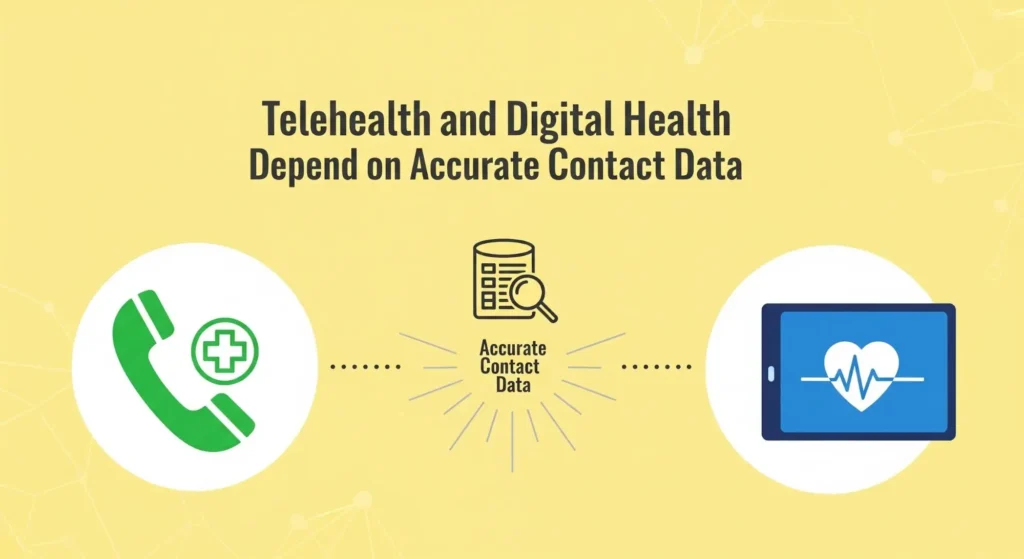
9. Telehealth and Digital Health Depend on Accurate Contact Data


Telehealth visits depend on email communications

The pandemic accelerated healthcare's digital transformation, making email accuracy more critical than ever for virtual care delivery.

Successful telehealth visits depend on email communications:

  • Visit Link Delivery: Patients need the video consultation URL delivered reliably
  • Pre-Visit Technical Checks: Instructions for testing connectivity must reach patients before appointments
  • Post-Visit Documentation: Visit summaries, prescriptions, and follow-up instructions
  • Technical Support Access: Help desk contact information when patients experience issues

10. Insurance Communication and Claims Processing Need Accuracy


Insurance communication and claims processing need accuracy.

Healthcare email verification affects more than just patient-provider communication; it impacts the entire revenue cycle.

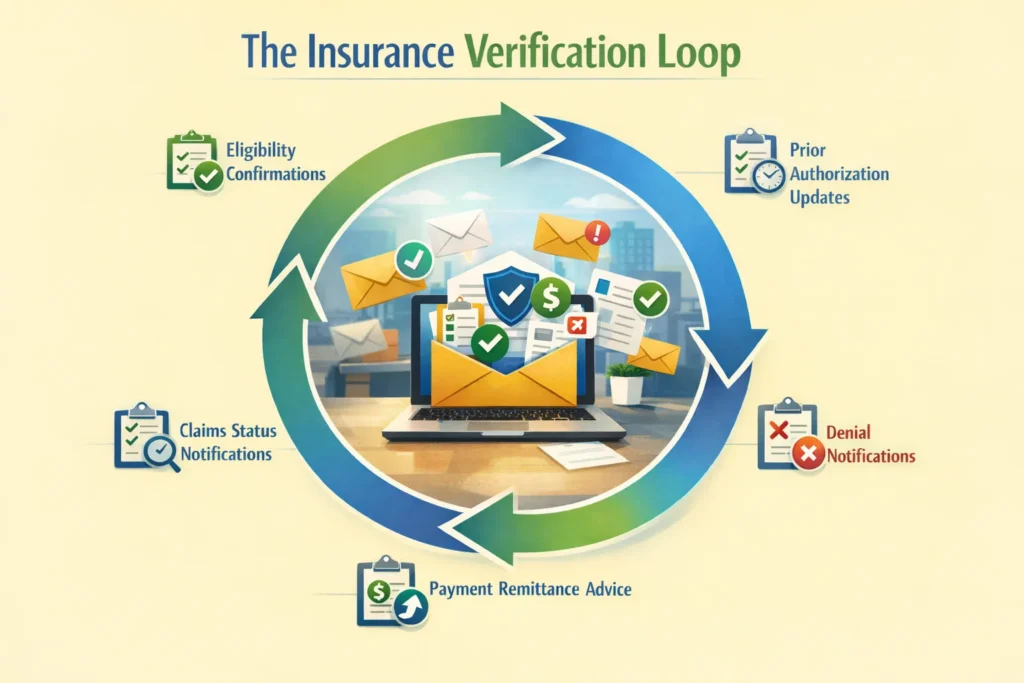
The Insurance Verification Loop


Modern insurance verification and pre-authorization processes increasingly happen via email:

  • Eligibility Confirmations: Automated eligibility checks return results to provider email addresses
  • Prior Authorization Updates: Status changes on authorization requests
  • Claims Status Notifications: Updates on submitted claims processing
  • Payment Remittance Advice: Electronic explanations of payment sent via email
  • Denial Notifications: Critical information about claim denials requiring appeals

11. Security Training and Phishing Prevention Start with Valid Lists


 Phishing simulation problem.

Healthcare staff security awareness training relies heavily on email-based testing and education. Invalid email addresses in your staff directory undermine these critical programs.

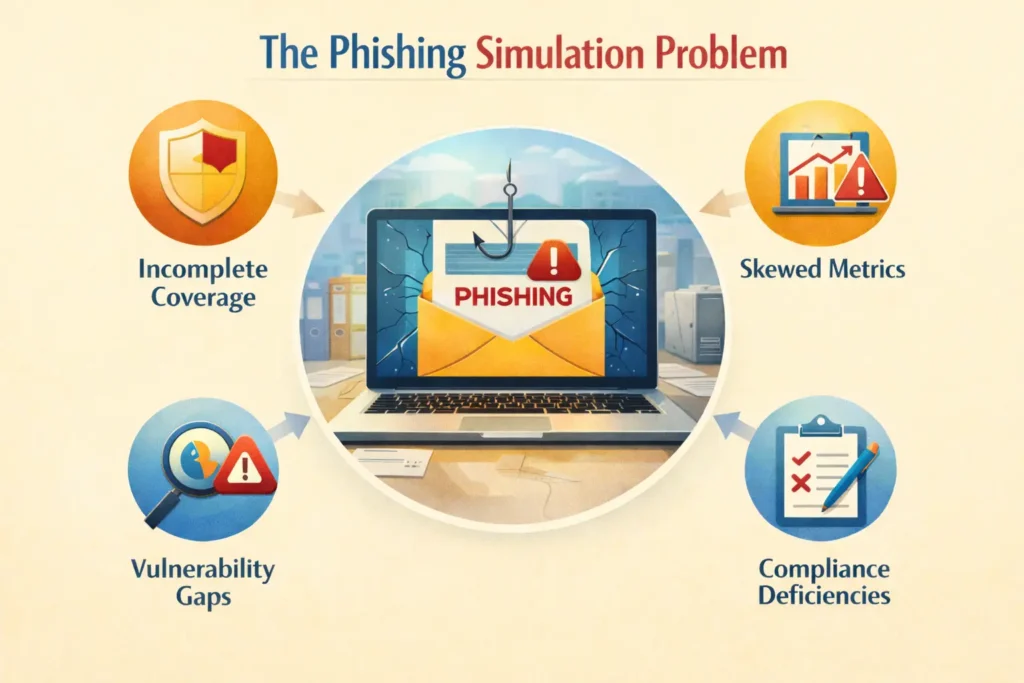
The Phishing Simulation Problem


Security teams conduct simulated phishing campaigns to train staff to recognize threats. But when staff directories contain invalid or outdated email addresses:

  • Incomplete Coverage: Training doesn't reach all staff members who need it
  • Skewed Metrics: Reports show artificially high success rates because invalid addresses "passed" by default
  • Vulnerability Gaps: Untrained staff become the weak links attackers exploit
  • Compliance Deficiencies: Required annual security training documentation shows incomplete participation

How To Do Patient Email Validation/Verification?


Roll out email verification systematically:

Phase 1 - New Patient Registration


Implement real-time verification at all data entry points where patients provide email addresses

Phase 2 - Patient Portal


Add verification to patient portal signup and profile update processes

Phase 3 - Existing Database


Process your current patient database to identify and flag invalid addresses

Phase 4 - Staff Directories


Clean and verify internal email lists used for training and communications

Phase 5 - Vendor and Partner Lists


Extend verification to external stakeholder contact databases

Phase 6 - Ongoing Monitoring


Establish regular re-verification schedules to maintain data quality

How to Implement Email Verification With Clearout in the Healthcare System?


Clearout Home Page.

Here are the steps you should follow to implement Clearout for verification of your patient's email.

1. Create a Free Account


Sign up for Clearout, no credit card needed. You get 100 free credits to test your patient email list, and credits never expire.

2. Upload Your Patient List for Bulk Verification


Go to Bulk Verification, upload your list (CSV, CRM export, EHR export), and let Clearout run 20+ checks to identify invalid, disposable, risky, or catch-all emails.

3. Review and Clean Your Results


Download the verified output showing valid, invalid, disposable, catch-all, and risky addresses. Update your CRM or patient system using the clean data.

4. Use Quick Validation for One-Off Checks


Need to confirm a single patient's email during registration or scheduling? Use Quick Validation to check up to 10 emails instantly.

5. Add Real-Time Verification With Clearout API or Form Guard


Integrate Clearout’s real-time API into patient registration forms, portals, and onboarding flows. This blocks invalid or unsafe emails before they enter your database.

6. Re-Verify Your Database Regularly


Patient emails change often. Run periodic bulk checks (quarterly or bi-annually) to maintain compliance, deliverability, and communication accuracy.

The Healthcare Email Verification Comparison Matrix


Different healthcare organizations have different needs. Use this matrix to evaluate your requirements:

Organization TypePrimary Email Use CasesVerification Priority LevelRecommended Approach
Small Practices (1-5 providers)Appointment reminders, patient portalMediumReal-time verification at registration + annual list cleaning
Medium Clinics (6-25 providers)Appointment reminders, marketing, telehealthHighReal-time verification + quarterly verification + marketing list management
Large Group Practices (25+ providers)All communications, care coordination, analyticsVery HighEnterprise verification platform with API integration + continuous monitoring
Hospitals & Health SystemsEnterprise-wide communications, interoperability, revenue cycleCriticalComprehensive verification across all systems + dedicated data quality team
Telehealth ProvidersVirtual visit links, technical support, follow-upCriticalReal-time verification + pre-visit confirmation + multi-channel backup
Specialty PracticesProcedure-specific instructions, complex care coordinationHighReal-time verification + confirmation before critical communications

The Bottom Line: Email Verification Is Healthcare Risk Management


Email verification for healthcare organizations is a risk management strategy that protects patients, prevents breaches, ensures compliance, and improves care delivery.

Modern healthcare email verification tools like Clearout are:

  • Easy to implement
  • Give high ROI within the first quarter
Want to make sure every patient email you send actually lands in their inbox? Use Clearout email verifier today.
Get 100 Free Credits Now

FAQs


1. What is the email verification process?
The email verification process checks whether an email address is real, active, and safe to receive email communication. It runs deeper checks along with syntax, domain validity, MX records, eliminates typos, and does spam trap detection. Tools like Clearout run these checks instantly to make your deliverability strong.
2. How do I email a patient?
To email a patient, use a secure, approved domain and ensure the address is verified before sending. Keep the message clear, professional, and HIPAA-compliant by avoiding unnecessary PHI unless you use encrypted channels. Include your practice name, purpose of the email, next steps, and contact details. Always follow consent and privacy requirements.
3. How can I verify an email address?
You can verify an email address using a healthcare-safe email verification tool like Clearout. Instantly validate an email address or upload a list for the tool to check domain validity, MX records, greylisting verification, syntax, gibberish. It even removes duplicate email addresses. Its real-time API verification and Form Guard also validate emails at the point of entry to keep your patient database clean.

Share this article

Recent Posts

26 Dec 2025
11 Reasons Why Email Verification is Crucial in Healthcare

Learn 11 reasons why email verification is crucial in the healthcare industry, from HIPAA compliance ...

24 Dec 2025
MX Records Simplified: Sustain Email Effectiveness in 2026

Explore what MX records are, how they work, their components, common mistakes, examples and why corr ...

23 Dec 2025
Email Frequency by Industry: What Works in 2026

Learn how often to send emails in 2026 based on your industry. Explore email frequency benchmarks, b ...

22 Dec 2025
10 Best CRM Software Tools for 2026 (Top Picks & Pricing)

Explore the 10 best CRM software tools for 2026. Compare features, pricing, integrations, and AI cap ...

22 Dec 2025
How To Create a Drip Email Campaign That Converts Leads

A drip email campaign is a marketing strategy that is used to send automated emails to the targeted ...

Clearout's

Form Guard

Validate email, phone & name on any forms!

  • Real signups only
  • Verified emails
  • Valid phone numbers
  • No fake names
  • Cleaner CRM
  • No devs needed
Try for Free Now

Email Verification, Email Finding Form Guard & Prospecting Service

Expand Your Reach By Finding & Verifying Ideal Prospects.

Sign up & get 100 free credits

No Credit Card required

Create Free Account
Company

Why Clearout?

Pricing

Contact Us

Careers

Enterprise

Sitemap

FAQ

Status

Products

Email Verifier

Email Finder

Form Guard

Prospect

LinkedIn Email Finder

Reverse Lookup

Google Sheets Add-on

WordPress Plugin

ClearoutPhone

What's New?

Resources

Integrations

HubSpot

Team Account

API

Compare Email Verifier

Compare Email Finder

Compare Prospecting

Use Cases

Blog

Help

Legal

Privacy Policy

Terms

DPA

Security

Trust Center

Certification

ISO 27001/2022

SOC 2 Type 2

GDPR

Partnership

HubSpot Certified

Affiliates

Partners

Clearout for browser

⚡ Supercharge Your Prospect Research with Clearout's LinkedIn Chrome Extension - Find and Verify Emails with Confidence!

Clearout Chrome extension

clearout
© 2025 Clearout. All Rights Reserved. Powered by Clearout, LLC.
Auto Credit Replenishment is here! Your credits can now recharge automatically. Learn More ➞
X