


• Products
    • FindEmail FinderFind verified business emails from a name and companyLinkedIn Email ExtractorExtract person and company details enriched with emails and phone numbers from LinkedIn profilesProspectBuild SQL and MQL lists with real-time enrichment
      VerifyEmail VerifierAI-powered email verification in real time, in bulk or through APICatch-all Email VerificationResolve catch-all and SEG-protected addresses with Deep VerifyClearout for SheetsVerify emails inside Google Sheets
      Protect & maintainForm GuardCapture intent leads, block fake or bot entries, and differentiate human vs. AI agent submissionsData PulseVerify, enrich and monitor CRM contacts continuously
  • Solutions
    • Sales teamsFind and verify buyer emails for outboundEmail marketersProtect sender reputation before every send
  • Resources
    • DeveloperAPIReference and quick-start guidesWebhooksReal-time event notificationsForm Guard SDKReal-time form validationMCP ServerConnect AI assistants to Clearout
      Knowledge baseGetting startedSet up your account in minutesFAQAnswers to common questionsLead generationBuild clean, verified lead lists
      GuidesPricing guideHow credits and plans workCompare email verifiersHow email verification tools compareCompare email findersHow email finder tools compareData Pulse & HubSpot BreezeKeep Breeze Intelligence data reliable
      BlogEmail verification toolsA guide to choosing a verifierFind anyone's email addressPractical ways to find a business emailForm validationBest practices for cleaner formsView all postsLatest articles and updates
      IntegrationsHubSpotTwo-way sync with Data PulseSalesforceValidate and enrich CRM recordsZohoKeep Zoho CRM contacts cleanApolloVerify contacts before outreachView all integrationsBrowse every connected tool
  • Free Tools
    • Disposable Email CheckerSpot throwaway addresses instantlyReverse LinkedIn Profile LookupLook up details from a LinkedIn profileReverse Email LookupFind who is behind an email addressEmail List CleanerRemove invalid emails from your listCompany Domain Finder APIFind a company domain from its name
  • Pricing
  • Login
Try it free Book a 1-to-1 demo
Aastha Shaw / July 15, 2025 August 25, 2025

8 ActiveCampaign User Scenarios and Ways to Optimize Them


8 ActiveCampaign User Scenarios and Ways to Optimize Them

Emails continue to deliver the highest ROI among digital marketing channels—and in 2025, ActiveCampaign CRM remains one of the most trusted for automation, email marketing, and customer lifecycle management.

But success isn’t guaranteed.

With tightened spam filters, shifting algorithms, and increased sender scrutiny by ISPs and ESPs,campaign performance is getting harder to maintain.

That’s why even experienced marketers are asking:

  • "Why are my campaigns still underperforming?"
  • "Why do automations keep breaking?"
  • "Why are Outlook emails disappearing while Gmail works fine?"

If you're nodding along, you’re not alone.

Here's a breakdown of the most common ActiveCampaign pain points reported across user forums and communities—and the actionable reasons behind them.

Table of Content:


● Common ActiveCampaign User Problems
1. Emails Reach Gmail But Not Outlook/Hotmail
2. Open Rates Drop Even After List Validation
3. Automations Delayed or Not Triggering
4. Inconsistent Tag/Field Usage Breaking Segments
5. High Bounce Rates Even After List Cleaning
6. ActiveCampaign’s Learning Curve is Still Steep
7. Reporting Doesn’t Explain What’s Wrong
8. Too Many Inactive or Unqualified Leads Inflate CRM Tiers
● Final Takeaway: Keep Your ActiveCampaign CRM Clean, Smart, and Efficient
● FAQ by ActiveCampaign User

Common ActiveCampaign User Problems


1. Emails Reach Gmail But Not Outlook/Hotmail


What Users Say:

On Reddit threads like r/emailmarketing, users report strong performance on Gmail but nearly no engagement on Outlook/Hotmail. The issue is more prominent in B2B lists.

Why This Happens:

Microsoft’s spam filters (including Outlook, Hotmail, Live, MSN) are more aggressive than Google’s. They penalize:

  • Low sender reputation
  • Use of catch-all domains
  • Low engagement rates
  • Suspicious or high-volume bursts

How to Fix It:

  • Segment Outlook/Hotmail addresses into a separate list
  • Reduce send frequency or start with lower volume to build trust
  • Avoid aggressive CTAs in first sends (limit links, images)
  • Run inbox placement tests with tools like GlockApps.
  • Use a warm-up strategy to build engagement on Microsoft inboxes

2. Open Rates Drop Even After List Validation


What Users Say:

G2 and Capterra reviewers say things like: “We verified our list but our open rate still plummeted from 22% to 6%. We didn’t know why.”

Why This Happens:

Basic validation confirms email existence, not engagement potential. If your emails are going to inboxes no one opens (e.g., role accounts, disengaged users), your sender score will fall.

How to Fix It:

  • Use a real-time email verifier like Clearout that performs 20 real-time checks with 99% accuracy
  • Implement engagement-based segmentation
  • Suppress contacts inactive for >90 days
  • Run A/B tests across copy, sender names, and send time
  • Use predictive engagement scoring inside ActiveCampaign

3. Automations Delayed or Not Triggering


What Users Say:

Many ActiveCampaign users report that contacts enter workflows, but emails fail to fire or trigger at the wrong time. This often happens in welcome series or drip sequences.

Why This Happens:

Automations begin before contact data (like email validity) is fully processed. Sometimes, conditional logic also fails due to incomplete or incorrectly mapped fields

How to Fix It:

  • Use conditional splits based on status or verification fields
  • Monitor execution logs in ActiveCampaign regularly
  • Add wait steps to allow field updates before evaluating conditions

4. Inconsistent Tag/Field Usage Breaking Segments


What Users Say:

Common complaints include “segmentation failing mid-campaign” and “filters returning zero contacts despite having verified users.”

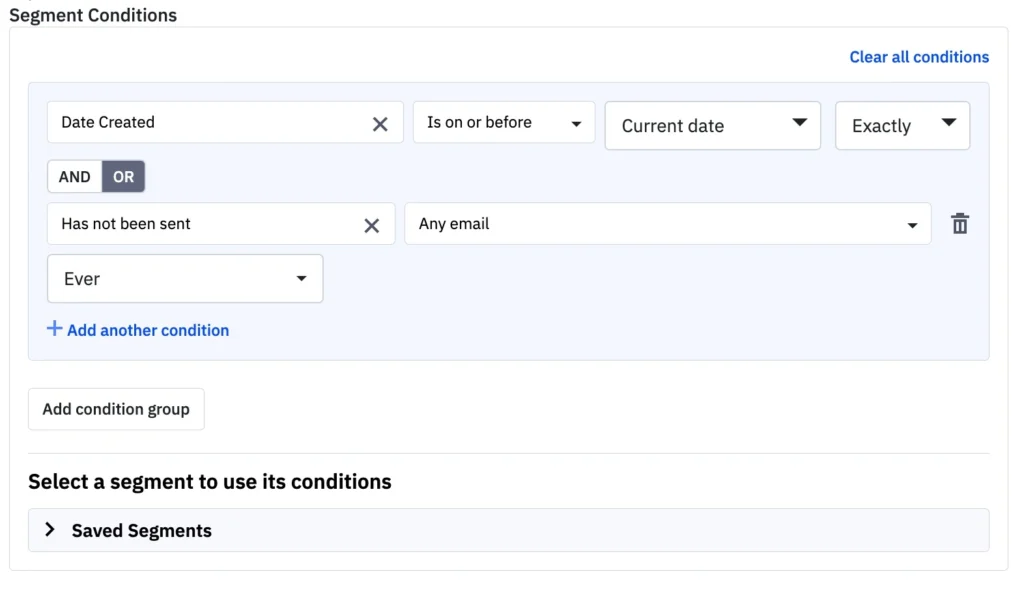
Segmentation condition forActiveCampaign Email Marketing

Why This Happens:

  • Field names are inconsistent (e.g., "Email_Status" vs. "Verified_Email")
  • Tags differ between automations and lists
  • Mapping isn't documented or enforced across teams

Solution:

  • Standardize field and tag naming conventions across your account
  • Document what each tag means and where it’s applied
  • Audit automations monthly to fix broken logic

5. High Bounce Rates Even After List Cleaning


What Users Say:

Some users report bounce rates as high as 10% even after using a popular verifier. This causes ActiveCampaign account warnings or deliverability restrictions.

Why This Happens:

  • Many tools mark catch-all and role-based emails as “safe”
  • Disposable or spamtrap emails are missed
  • High-risk addresses skew metrics and invite ISP filtering

Solution:

  • Use a score-based verifier before import, not just after
  • Suppress catch-all and disposable domains unless confirmed warm
  • Combine suppression with re-engagement or warming campaigns

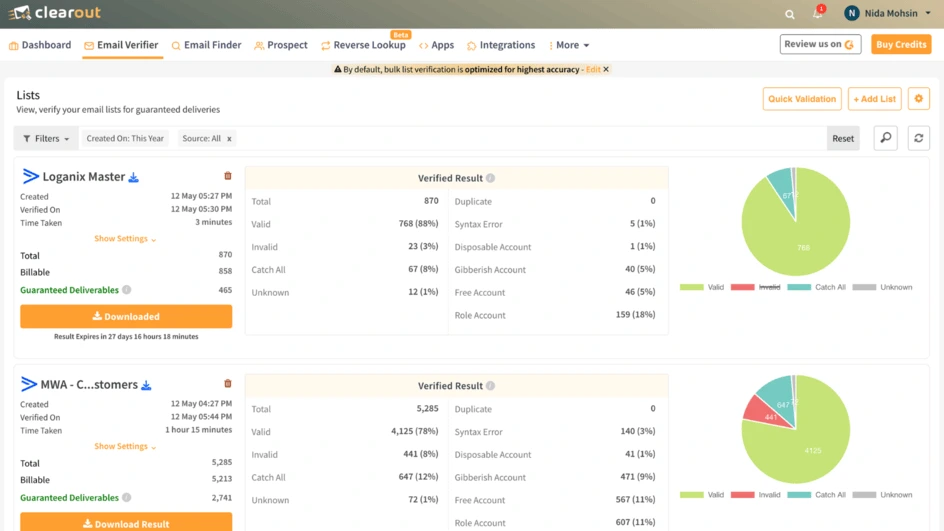
Email Verification & List cleaning

Where Clearout Helps:

  • Provides AI-powered bulk email verification with enhanced filtering for catch-all, disposable, role-based, and gibberish emails
  • Gives actionable AI insights and Guaranteed Deliverables for minimizing bounce rates
  • Ideal for periodic database cleanup, especially before major campaign launches

6. ActiveCampaign’s Learning Curve is Still Steep


What Users Say:

New users on Quora and Reddit say: “Powerful, but overwhelming.” Common problems include:

  • Confusing automation builder
  • Difficulty managing tags and lists
  • Limited default reporting options

How to Fix It:

  • Start with pre-built automation templates from the marketplace
  • Use ActiveCampaign University or community webinars
  • Keep contact structure simple: 1 list, tags for behavior/status
  • Use native integrations and tools like Zapier or Make for visual triggers and error recovery

7. Reporting Doesn’t Explain What’s Wrong


What Users Say:

Many users across G2, Reddit, and community forums agree that ActiveCampaign's reporting capabilities feel too basic when it comes to diagnosing automation or campaign issues.

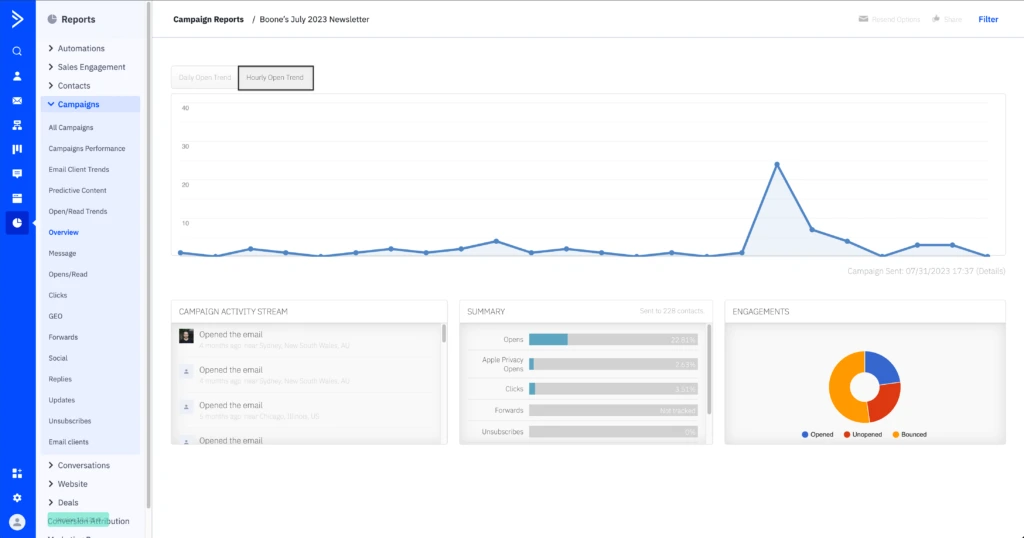
ActiveCampaign CRM Reporting

Why This Happens:

ActiveCampaign's default reports show opens, clicks, and unsubscribes—but lack detailed attribution or diagnostic views. There’s limited transparency on:

  • Which logic path contacts took
  • Why certain steps were skipped
  • Whether external conditions (e.g., email status, engagement history) blocked delivery

How to Fix It:

  • Custom Logging: Add custom fields to track milestones like entered_flow, email_verified, or last_action_taken. This creates a visible path for every contact
  • Google Analytics UTM Parameters: Use UTM tagging in emails to trace engagement and conversion through your website analytics
  • Inbox Testing: Tools like Mail-Tester or GlockApps let you test deliverability before launch, helping identify issues tied to domain/IP reputation
  • Automation Reporting Filters: Use the “view path” option within automation reports to analyze contact journeys and identify blocks

8. Too Many Inactive or Unqualified Leads Inflate CRM Tiers


What Users Say:

One of the most pressing concerns for marketing teams using ActiveCampaign is the rapid escalation of platform costs—often driven by high volumes of inactive or low-quality contacts.

Why This Happens:

ActiveCampaign pricing tiers are based on the total number of contacts, not just active ones. If your list includes unverified signups, fake contacts, or old leads who haven't opened anything in months, you're likely overspending.

How to Solve:

  • Remove contacts who haven’t opened any email in 90+ days
  • Use sunset automations to re-engage or remove users
  • Export dormant users quarterly and re-import only if they return via forms

Where Clearout Helps:

  • Helps control list growth by verifying new contacts at the point of entry
  • Prevents fake or incomplete signups that inflate your contact count unnecessarily

👉 Get Clearout’s FormGuard for Email, Phone & Name Verification all at once at point of capture!

Final Takeaway: Keep Your ActiveCampaign CRM Clean, Smart, and Efficient


ActiveCampaign offers advanced marketing automation capabilities, but long-term success depends on the quality of the data that powers it. Automations, personalization, and segmentation all hinge on the accuracy and relevance of your contact records.

Tools like Clearout aren’t magic bullets—but they do play a vital role in keeping your CRM lean and your campaigns efficient by helping with two key things:

✅ Real-time validation key lead data at the point of capture

✅ Safe and intelligent bulk email list cleanup before campaign launches

Beyond that, maintaining high performance requires consistent marketing hygiene, accurate tagging, and a proactive approach to engagement.

Looking to reduce bounces, save on contact tier costs, and improve inbox placement?

  • Start with a free list cleaning using Clearout
  • Easy integration with ActiveCampaign via Direct API and automation actions
  • Real-time contact validation with customizable verification results
  • Automated workflows triggered at form submission or list subscription
  • Focus your energy on converting qualified leads—not cleaning up after flawed workflows

A cleaner CRM means better decisions, better segmentation, and better outcomes. Make your automations work for you—not against you.

FAQ by ActiveCampaign User


Q1. Why are my ActiveCampaign emails landing in spam, especially on Outlook or Hotmail?


If your Active Campaign emails are landing in spam on Outlook/Hotmail but not Gmail, it’s often due to low engagement history, sudden spikes in volume, or emails sent to catch-all or risky domains. Use inbox placement testing tools and segment high-risk domains separately to warm them up.

Q2. How can I reduce bounce rates even after verifying emails?


Bounce rates remain high when role-based, disposable, or catch-all emails are marked “safe” but still not deliverable. Use score-based email verification Clearout and re-segment your audience by deliverability score. Always clean your list before every major campaign.

Q3. Why don’t my automations trigger even though contacts are entering them?


This usually happens when contact data (like email validity or custom field values) isn’t ready at the moment the automation starts. Add a short wait step, ensure verification is complete, and validate that conditionals are configured using the correct field names.

Q4. How do I keep my ActiveCampaign tags and fields organized across multiple workflows?


Create a standardized naming convention for tags and custom fields (e.g., clearout_score, user_status, source_form). Document usage in a shared internal guide and periodically audit your automation conditions for consistency.

Q5. What’s the best way to clean up my ActiveCampaign database?


Start by exporting and verifying your contact list with a tool like Clearout. Remove invalid, role-based, or spam-trap addresses. Suppress unengaged users (no opens/clicks in 90+ days), and build re-engagement flows before deleting them.

Q6. How can I stop paying for unengaged or fake leads?


Use real-time verification on your lead capture forms to stop fake or incomplete data from entering your CRM. Combine this with sunset policies to automatically suppress or delete leads who don’t engage over time.

Q7. Why are my open rates dropping suddenly even when nothing changed?


Email providers now prioritize engagement history over sender reputation alone. If your audience stops opening your emails—even valid ones—your future sends may go to spam. Segment based on past interactions and test your content and timing.

Q8. Can I use Clearout to verify phone numbers and names too?


Yes. Clearout’s real-time JavaScript widget supports verification of email, phone number, and name fields at the point of capture. This ensures cleaner data, fewer fake leads, and better automation performance inside ActiveCampaign.

Share this article

Recent Posts

24 Nov 2026
Salesforce Email Tracking: A Complete Guide

Learn how Salesforce email tracking works, enable tracking, understand open data limitations, and im ...

24 Nov 2026
Clearout MCP: How to Verify and Find Emails Inside Your AI Assistant

Connect Clearout MCP to Claude, ChatGPT and other AI assistants to find business emails, verify addr ...

24 Nov 2026
Email Marketing Tips for Insurance Agents: A Complete Guide

Learn email marketing tips for insurance agents, from campaign examples and list verification to pre ...

19 Nov 2026
6 Email Finder Tools for AI Agents

Explore 6 email finder tools for AI agents. Compare features, verification, APIs and MCP integratio ...

17 Nov 2026
Best Inbound Email APIs: Features, Pricing, and Comparison (2026)

Compare the best inbound email APIs in 2026 by features, pricing, and use case. Learn how Clearout ...

Black Friday Sale - Up to 50% Off GRAB THE DEAL

Email Verification, Email Finding Form Guard & Prospecting Service

Expand Your Reach By Finding & Verifying Ideal Prospects.

Sign up & get 100 free credits

No Credit Card required

Create Free Account
Company

Why Clearout?

Pricing

Contact Us

Careers

Press

Enterprise

Sitemap

FAQ

Status

Products

Email Verifier

Catch-all Verification

Email Finder

Form Guard

Data Pulse

Prospect

LinkedIn Email Finder

Reverse Lookup

Google Sheets Add-on

WordPress Plugin

ClearoutPhone

What's New?

Resources

Clearout Insights

Integrations

HubSpot

Team Account

API

Clearout MCP

Compare Email Verifier

Compare Email Finder

Compare Prospecting

Use Cases

Blog

Help

Legal

Privacy Policy

Terms

DPA

Security

Trust Center

Certification

ISO 27001/2022

SOC 2 Type 2

GDPR

Partnership

HubSpot Certified

Affiliates

Partners

Clearout for browser

⚡ Supercharge Your Prospect Research with Clearout's LinkedIn Chrome Extension - Find and Verify Emails with Confidence!

Clearout Chrome extension

Clearout
© 2026 Clearout Inc. All Rights Reserved. Powered by Clearout.